The Aransas Project ask for Review of Whooping Crane Case

The case is back in court concerning freshwater needs by whooping cranes on Aransas National Wildlife Refuge. The Aransas Project (TAP) responded to the recent Fifth Circuit Court of Appeal’s three judge panel decision concerning freshwater needs of whooping cranes on July 28, 2014. TAP is asking the Fifth Circuit for a review of their decision with all of the Fifth Circuit judges participating (view the full petition).

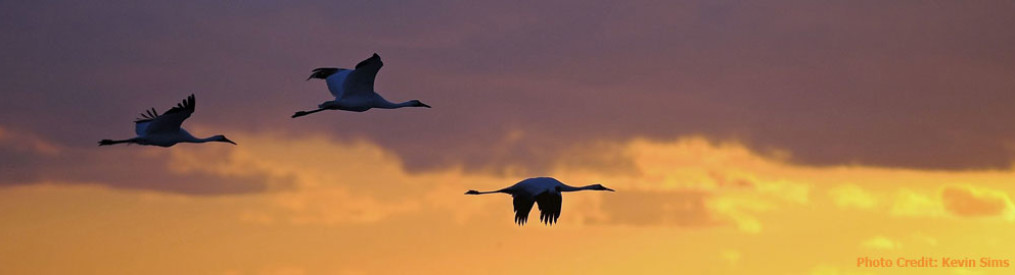
The federally protected whooping crane faces extinction. There were only 304 of the birds when they were counted on Aransas National Wildlife Refuge during the past winter. This last wild flock of whoopers on earth migrates 5,000 miles between Texas and Canada every year.

Map of Guadalupe River and San Antonio River watershed. These rivers carry fresh water flows into bays and estuaries near Aransas Refuge. Map by ICF

The crane’s only winter refuge is on the Texas coast where they have frequently suffered high mortality due to low freshwater inflows. Freshwater flows from the Guadalupe and San Antonio Rivers into the San Antonio Bay estuary within the Aransas Refuge complex.

Legal sources advise that “The Appeals panel seemingly exceeded its authority by disregarding the fact finding done by the trial judge, and substituted its own fact finding, rather than returning the case to the district court with direction to apply the facts to what the panel believes is the correct legal standard. This seeming judicial activism in the recent Appeals decision may be enough for the rest of the Fifth Circuit Court judges to reconsider the case with all judges participating.”

TAP’s original legal action was initiated on March 10, 2010. TAP filed a lawsuit against several officials of the Texas Commission on Environmental Quality (TCEQ) for illegal harm and harassment of whooping cranes at, and adjacent to, Aransas National Wildlife Refuge, in violation of the Endangered Species Act (ESA). The case went to trial before the United States District Court for the Southern District of Texas in December 2011.

TAP contended that the “TCEQ allowed too much water to be removed from the Guadalupe andSan Antonio Rivers, such that the bay salinity was changed beyond what drought would cause, resulting in reduced fresh drinking water and food supply that ultimately caused the death of at least 23 whooping cranes during the winter of 2008 – 2009.” TAP used court evidence to described how freshwater inflows are tied to the fate of whooping cranes and all who depend on the bays for their livelihoods.

Janis Graham Jack, Senior United States District Judge heard the case and ruled on March 11, 2013 that the TCEQ, have violated section 9 of the ESA and were not using its powers available to protect the endangered whooping cranes. TCEQ officials were enjoined from approving or granting new water permits affecting the Guadalupe or San Antonio Rivers until the State of Texas provides reasonable assurances to the Court that such permits will not take whooping cranes in violation of the ESA.

The Fifth Circuit Court of Appeals, on June 30, 2014 in a narrowly-tailored decision (opinion), held that the federal district judge misapplied certain legal theories when it found that the TCEQ was liable for the deaths of 23 endangered and federally-protected whooping cranes in 2008-2009. The Fifth Circuit concluded that, “Because the deaths of the whooping cranes are too remote from TCEQ’s permitting withdrawal of water from the San Antonio and Guadalupe Rivers, the state defendants cannot be held liable for a take or for causing a take under the ESA. Even if the state defendants should be held liable, the injunction was an abuse of discretion. The district court’s judgment is REVERSED.”

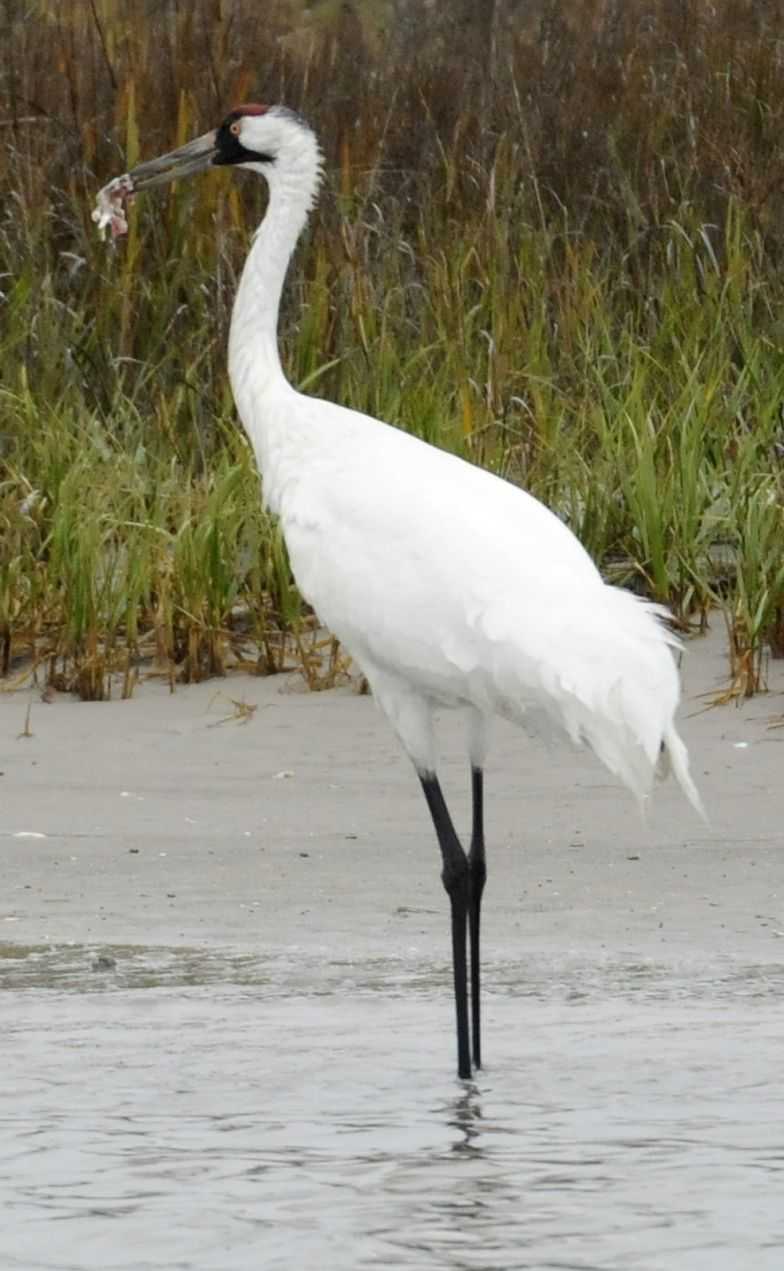
Whooping cranes need fresh water to create healthy habitat on Aransas NWR.

Whooping cranes need fresh water to create healthy habitat on Aransas NWR.

Friends of the Wild Whoopers (FOTWW) applauds TAPS decision to responded to the recent Fifth Circuit Court of Appeal’s three judge panel decision by asking that there be review of their decision with all of the Fifth Circuit judges participating. The courts and, or Texas public officials need to make an intelligent decision concerning adequate fresh waters flowing into the bays and estuaries associated with the Aransas National Wildlife Refuge. The fresh water is necessary for the continued survival of endangered whooping cranes and hundreds of other fish and wildlife species using the area.

Chester McConnell, Friends of the Wild Whoopers

***** FOTWW’s mission is to protect the Aransas/Wood Buffalo population
of wild whooping cranes and their habitat
. *****

friendsofthewildwhoopers.org logo

friendsofthewildwhoopers.org


FacebookTwitterGoogle+Share

Texas water plans must consider endangered species

Melinda Taylor and Jeremy Brown, For the San Antonio Express-News, Opinion

July 7, 2014 | Updated: July 7, 2014 4:11pm

SAN ANTONIO — The 5th Circuit Court of Appeals ruled recently that Texas did not violate the Endangered Species Act, or ESA, through the operation of its surface water permitting program.

Texas was absolved in recent whooping crane deaths, but in the future, it will be forced to balance the needs of humans and the environment. Photo by Pat Sullivan, Associated Press

Texas was absolved in recent whooping crane deaths, but in the future, it will be forced to balance the needs of humans and the environment. Photo by
Pat Sullivan, Associated Press

The long-awaited opinion reverses a Corpus Christi district court decision holding that the Texas Commission on Environmental Quality caused the deaths of 23 endangered whooping cranes during the drought of 2008 and 2009.

The lower court had found the agency harmed the cranes indirectly by authorizing cities, farmers and river authorities to divert water from the San Antonio and Guadalupe river basins. The diversions reduced freshwater inflows into Aransas Bay, where the cranes spend their winters, increasing salinity levels and decreasing the wolf berries and blue crabs the birds depend on for food.

A coalition of landowners and environmental groups known as the Aransas Project accused the state of violating the ESA. The trial court agreed and enjoined the TCEQ from approving additional water withdrawals until it obtained a permit from the federal agency charged with protecting endangered species.

Had the appellate court affirmed, TCEQ would have faced the challenge of maintaining flows into Aransas Bay while respecting existing rights to surface water and working within a statutory framework that regards environmental flows as a secondary priority. With the 5th Circuit opinion, the agency has dodged a bullet — but only on the narrow issue of proximate cause.

As anyone who has ever heard about a butterfly flapping its wings knows, many factors can set a causal sequence into motion. Proximate cause is a legal concept providing that a person should only be held liable for that sequence if the outcome would have been reasonably foreseeable.

The 5th Circuit found the causal link between the TCEQ’s water permitting program and the cranes’ deaths too attenuated to satisfy the proximate cause requirement. The court cited multiple factors that affect crane habitat, including tides, drought and overfishing. Still, it did not reach the question of whether the state could ever be held liable for licensing third parties who cause harm to an endangered species.

If another state agency such as the Texas Department of Transportation wanted to construct a highway that would destroy habitat for a listed species, that agency would have to obtain a federal permit. On that point, the law is settled. More controversial is the idea that the ESA imposes vicarious liability on state agencies that issue permits to third parties that, in turn, harm a protected species.

The few courts that have considered the question have found that certain situations can give rise to vicarious liability.

The federal government is considering whether more than 20 aquatic species in Texas qualify for protection under the Endangered Species Act. Most of these species live in bodies of water far from proposed projects.

The sharpnose and smalleye shiners are exceptions, however. They occur in the upper Brazos River basin and, according to the U.S. Fish and Wildlife Service, the “primary” threat the species face is habitat loss and modification “resulting mainly from reservoir impoundments.” The shiners were proposed for listing last summer, with a final decision slated for this month. If an environmental group wished to challenge one of the proposed reservoirs under the ESA, proving proximate cause would not be difficult.

In its opinion, the 5th Circuit observed that “though the state interest is strong in terms of managing water use, so is the federal interest” in endangered species. Even though it won the case, the TCEQ will need to develop strategies that balance the needs of humans and the natural environment if it is to avoid future conflicts with the ESA and the rare species the law is intended to protect.

Melinda Taylor is executive director and Jeremy Brown is a research fellow at the Center for Global Energy, International Arbitration and Environmental Law at the University of Texas School of Law.

SHARE ACCESS VIEW - You are viewing the full text of this article because it was shared by a San Antonio Express-News subscriber. Subscribe today for full access to the San Antonio Express-News in print, online and on your iPad.

***** FOTWW’s mission is to protect the Aransas/Wood Buffalo population
of wild whooping cranes and their habitat
. *****

friendsofthewildwhoopers.org logo
friendsofthewildwhoopers.org