Whooping Cranes Dancing

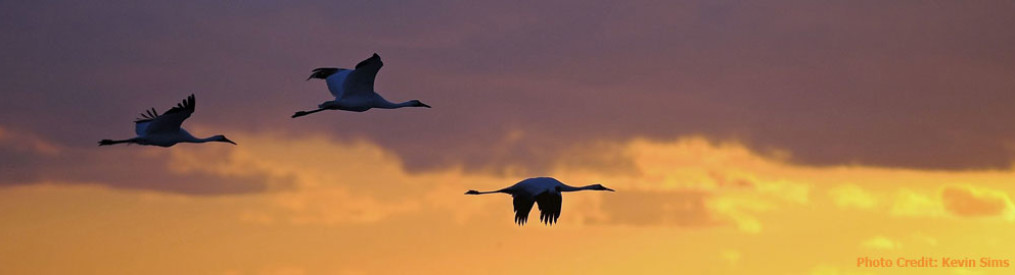
Whooping cranes dance for different reasons and are well known for their courting dances. People may think that they only dance during the courting season but researchers believe that they dance at other times and for other reasons as well. If they are a mating pair, they dance to strengthen their bond with their mate, they may dance to let off tension and relax, or just for the fun of it because they’re happy. Young whooping cranes may join in on the dance and it may help strengthen their motor skills while other cranes watching may spontaneously join in the dance.

The dance may be characterize by the male fully extending his wings while bowing and raising his head to impress the onlooking female. He leaps high into the air, executing a half turn before landing and continues he body bobbing and leaping. If the female is interested, she will show her interest by joining the male and leaping into the air too. The two of them will continue this ballet and almost as suddenly as it began, the dance is over.

Last week while out on the waters around Aransas National Wildlife Refuge, boat captain and FOTWW roving reporter, Kevin Sims was able to witness a pair of whooping cranes performing their spectacular dance. He was able to snap some photos of the pair and sent them to us. We have taken his photos and created a slide show for your viewing pleasure. FOTWW thanks Kevin for sharing his photos with us and we hope that you enjoy them.


whooping cranes

friendsofthewildwhoopers.org

***** FOTWW’s mission is to help preserve and protect the Aransas/Wood Buffalo
population of wild whooping cranes and their habitat. *****
Friends of the Wild Whoopers is a nonprofit 501(c)3 organization.

FacebookTwitterGoogle+Share

Whooping crane migration

Whooping Crane Migration

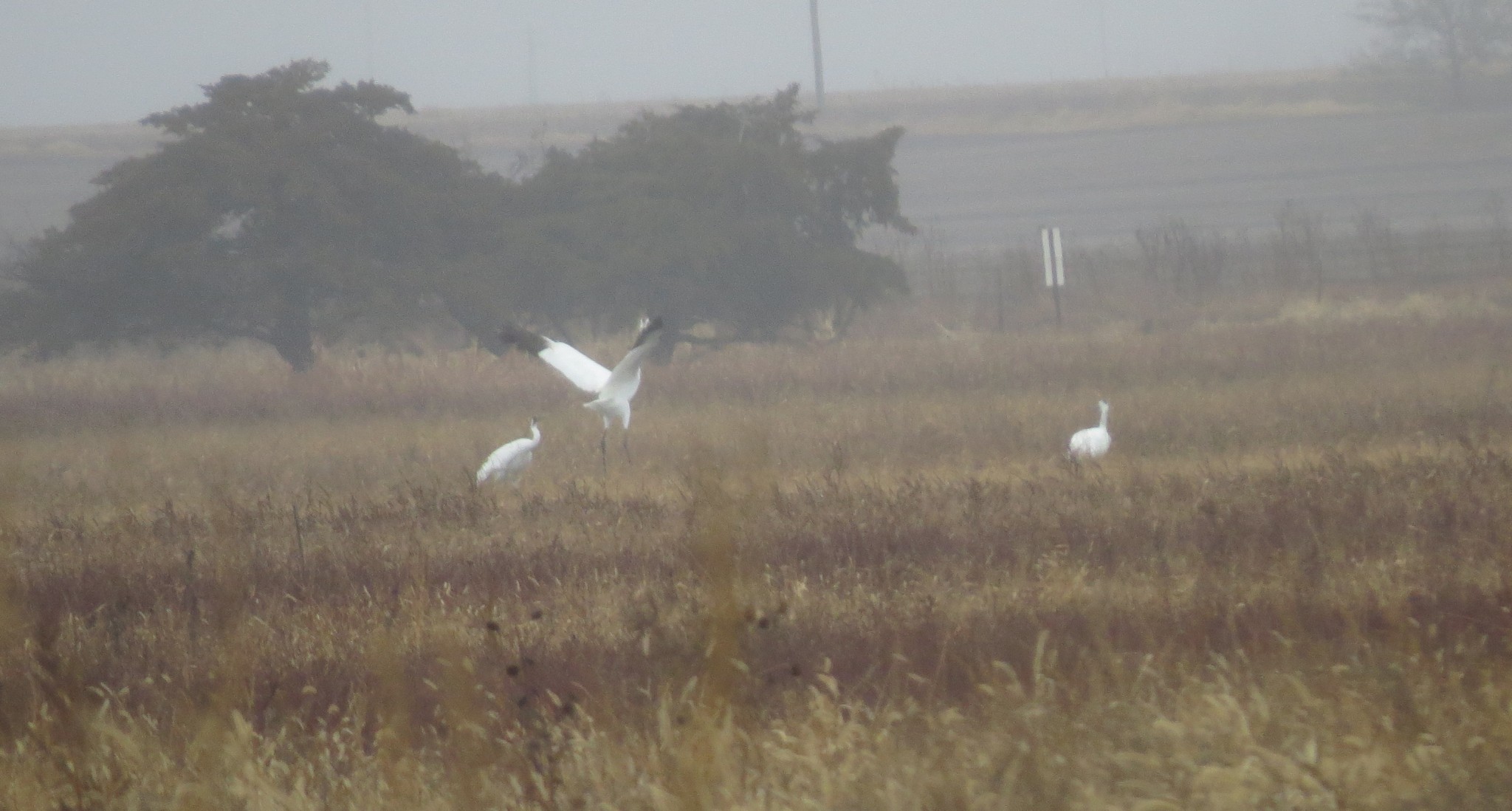
Whooping Cranes at Father Hupp Wildlife Management Area.

Whooping crane migration for the wild flock of whooping cranes appears to be well underway. Some whoopers have already arrived at Aransas National Wildlife Refuge. The rest are scattered throughout the Central Flyway, including a few reported at Quivira NWF in Kansas and areas in Nebraska.

Recently small groups of the whooping cranes have been spotted migrating through Nebraska with a group of five spotted at Branched Oak Lake and a group of six spotted at the Father Hupp Wildlife Management Area, (WMA).

Father Hupp WMA in Thayer County, NE has been temporarily closed due to the presence of that group of six whooping cranes and will remain close until they leave the area. This temporary closure is intended to not only protect whooping cranes, but to also protect the public from accidentally disturbing or harming the birds, which is illegal under federal and state law.

To read more and view a short video and photographs of the whooping cranes in Nebraska on ‘Magazine Outdoor Nebraska’, click here.

Whooping cranes are an endangered species

The entire wild population of whooping cranes is protected by both the federal Endangered Species Act and the Nebraska Nongame and Endangered Species Conservation Act. Penalties for killing, possessing, or harassing whooping cranes or other species protected under these laws may include fines of up to $50,000, up to year in jail, or both.

Public encouraged to report any whooping crane sightings

In Nebraska, report any sightings to: Game and Parks (402-471-0641)
U.S. Fish and Wildlife Service (308-379-5562)
The Crane Trust’s Whooper Watch hotline (1-888-399-2824)
Emails may be submitted to [email protected]

In Texas, report any sightings to:
Texas Parks & Wildlife’s Texas Whooper Watch

friendsofthewildwhoopers.org logo

friendsofthewildwhoopers.org

***** FOTWW’s mission is to help preserve and protect the Aransas/Wood Buffalo
population of wild whooping cranes and their habitat. *****
Friends of the Wild Whoopers is a nonprofit 501(c)3 organization.